Best Materials for Coastal Homes in Charleston, SC

Charleston’s coastal environment places unusual stress on building materials. High humidity and salt-laden air cause many products that perform well inland to deteriorate faster. Wood swells and shrinks. Metals corrode. Finishes break down. Choosing materials suited to these conditions reduces maintenance and protects the structure over time.
According to NOAA climate normals for the Charleston area, average relative humidity typically ranges from the high 60s in cooler months to the upper 70s in summer, with an annual average near 73 percent. Outdoor humidity regularly exceeds the 35–55 percent range recommended for dimensional stability of many wood products. Salt particles carried by wind settle on surfaces and accelerate corrosion when combined with moisture.
This guide examines materials that perform more reliably under these conditions. It focuses on exterior cladding, flooring, hardware, windows, cabinetry, and related components. Recommendations draw from coastal construction principles, material performance characteristics, and local climate realities.
Why Standard Materials Often Fail Here
Humidity causes hygroscopic materials such as wood to absorb and release moisture. When humidity rises, boards expand. When it falls, they contract. Repeated cycles produce cupping, crowning, gapping, or buckling in floors and can loosen joints in millwork.
Salt air introduces chlorides that attack metals. Corrosion rates increase significantly in coastal zones compared with inland locations. Unprotected steel fasteners and connectors can lose holding strength within a few years. Lower-grade stainless steels are more susceptible to pitting and crevice corrosion than higher-alloy grades.
These mechanisms explain why material selection must account for both moisture movement and chloride exposure rather than appearance or initial cost alone.
Exterior Siding
Fiber cement siding consistently ranks among the stronger options for coastal use. It is composed of cement, sand, and cellulose fibers. The material resists moisture absorption, does not rot, and is not a food source for mold or insects. It also holds paint well and maintains dimensional stability under humidity changes.
Vinyl siding requires little maintenance and resists moisture, but prolonged UV exposure and temperature cycling can lead to brittleness and fading. Engineered wood products improve on solid wood performance yet still require careful detailing and periodic maintenance in high-humidity environments.
Fiber cement generally offers longer service life in salt-exposed and humid conditions when installed with proper fastening and finishing. Local builders frequently specify it for both new construction and recladding projects because of its combination of durability and appearance options.

Flooring Systems
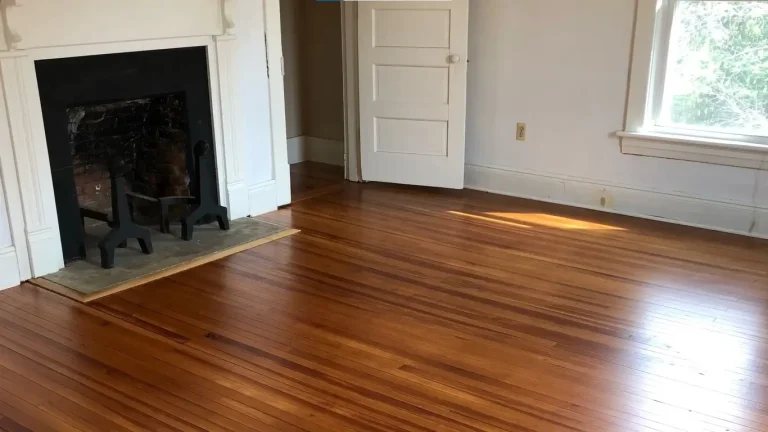
Solid hardwood remains popular for its appearance, especially in historic homes with original heart pine. However, solid wood reacts strongly to humidity swings. Engineered hardwood, built with a cross-laminated core, resists movement better and is often a more practical choice for many living areas when indoor humidity is managed.
Porcelain tile provides high moisture resistance and is well suited to kitchens, bathrooms, entryways, and other wet or high-traffic zones. It does not swell or cup. SPC (stone plastic composite) luxury vinyl plank is fully waterproof and dimensionally stable. It handles sand, grit, and surface moisture effectively and can closely mimic wood appearance.
Indoor relative humidity should be kept between 35 and 55 percent whenever feasible. This range supports most flooring systems and limits seasonal movement. Dehumidification during warmer months and monitoring with a simple hygrometer help maintain these levels.
Metal Hardware, Fasteners, and Connectors
Salt air is particularly aggressive toward metals. Standard zinc-plated fasteners and connectors begin to corrode relatively quickly in coastal exposure. Marine-grade 316 stainless steel contains molybdenum, which improves resistance to chloride-induced pitting and crevice corrosion compared with 304 stainless steel.
For exterior applications and locations near windows or doors, 316 stainless is the preferred specification for hinges, handles, fasteners, and structural connectors. Hot-dip galvanized coatings (G185 or higher) also provide improved protection when stainless is not used. Mixing dissimilar metals can create galvanic corrosion and should be avoided through compatible material selection or isolation.
PVD-coated fixtures and powder-coated aluminum finishes retain appearance longer than standard chrome or nickel in salt-exposed settings.
Windows and Doors
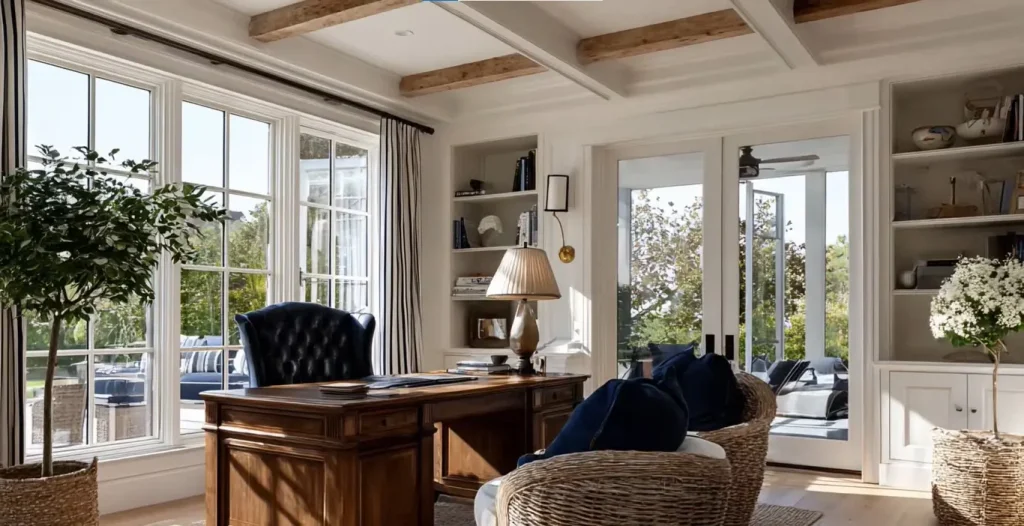
Frame materials must resist both moisture absorption and corrosion. Fiberglass frames offer excellent dimensional stability and do not corrode. Properly coated aluminum performs well when protective finishes are maintained. Vinyl resists moisture but requires adequate structural design for larger openings common in coastal homes.
Hardware on operable windows and doors should follow the same marine-grade principles applied to other fasteners. Impact-rated products that meet local wind requirements add resilience in storm-prone areas. Proper flashing and sealing details remain critical regardless of frame material.
Cabinetry and Interior Millwork
Standard medium-density fiberboard (MDF) is vulnerable to edge swelling when exposed to humidity. Once the core expands, full recovery is often impossible. Marine-grade plywood and denser species such as white oak provide better moisture resistance for cabinets and millwork, particularly in kitchens and bathrooms.
These choices reduce the risk of early failure and the need for premature replacement. In historic homes, matching the visual character of original millwork while improving moisture performance requires careful product selection.
Roofing and Related Components
Standing-seam metal roofing with high-performance coatings such as PVDF resists corrosion when details, fasteners, and flashings are correctly specified. Architectural asphalt shingles formulated for algae resistance and high wind can also perform adequately in the region.
Flashings, gutters, and fasteners must be compatible and corrosion-resistant. Dissimilar metals in contact can accelerate deterioration through galvanic action.
Moisture Management Beyond Materials
Material selection alone is insufficient. Crawl-space encapsulation with a continuous vapor barrier and dehumidification reduces moisture migration from below. Exhaust fans in kitchens and bathrooms should discharge outdoors rather than into attics or crawl spaces. Consistent indoor humidity control protects both structural and finish materials.
These practices work together with durable product choices to limit long-term damage.
Common Mistakes
Several recurring errors shorten material life in Charleston homes:
- Specifying standard (non-marine) stainless or zinc-plated fasteners in exposed or semi-exposed locations
- Installing solid hardwood without active humidity management
- Using conventional MDF for wet-area cabinetry
- Combining dissimilar metals without isolation
- Focusing primarily on initial appearance or cost rather than total performance in humidity and salt exposure
Avoiding these mistakes improves outcomes more than any single product upgrade.
Historic Homes and Material Compatibility
Many Charleston properties fall under Board of Architectural Review oversight for exterior work. Repair of original materials is generally preferred over wholesale replacement. When replacement is necessary, new materials should be compatible in appearance while offering improved resistance to local climate stresses.
Interior work faces fewer regulatory constraints, yet original floors, millwork, and details still contribute significantly to character and value. Balancing preservation goals with durability remains a central design challenge.
Practical Decision Framework
Evaluate exposure level first. Homes closer to the water or with greater wind-driven salt exposure require higher-grade metals and more robust cladding than properties farther inland. Verify current local building code requirements for wind and flood resistance, as these influence acceptable products and installation methods.
Consider total cost of ownership rather than purchase price alone. Materials that last longer and require less frequent replacement or repair often prove more economical over decades.
When in doubt, consult professionals familiar with coastal detailing and local climate performance. Manufacturer technical data and coastal construction guidance from sources such as FEMA provide additional reference points for critical assemblies.
Closing Perspective
No single material eliminates every risk posed by Charleston’s humidity and salt air. The most durable results come from matching product properties to actual environmental stresses, combining them with proper installation and ongoing moisture control. Homes designed with these factors in mind remain more comfortable, require less corrective work, and retain value longer.
For projects involving historic fabric or complex exposure conditions, early coordination between design, material selection, and installation teams produces the most reliable outcomes.
Ready to Choose the Right Materials for Your Charleston Home?
Selecting materials that handle humidity and salt air protects your investment for years. The right choices reduce repairs and keep your home looking better longer. If you are planning a renovation or new project, we can help you select durable options suited to Charleston conditions.
Contact us today to discuss your home. We guide homeowners through material decisions that balance beauty, performance, and long-term value.