Choosing Moisture-Resistant Flooring for Kitchens & Baths
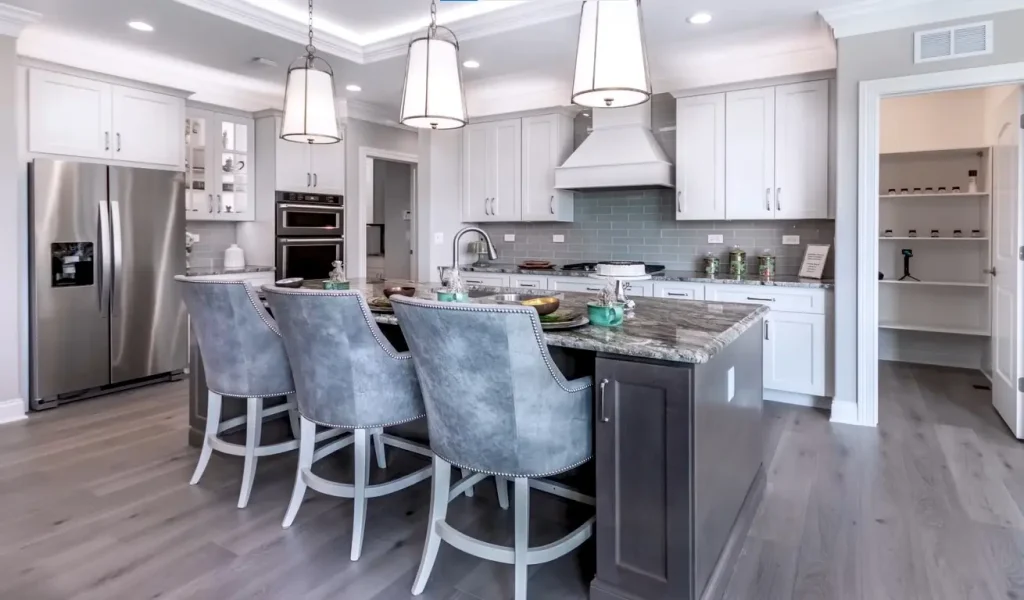
Kitchens and bathrooms generate constant moisture. Spills, steam, wet feet, and cleaning routines put floors under stress that living rooms rarely face. In Charleston’s humid coastal climate, the challenge is greater. Ambient humidity stays high for much of the year, and any flooring that absorbs water or moves with moisture changes will show problems sooner.
The right floor resists water, stays dimensionally stable, and holds up under daily use. The wrong choice cups, swells, stains, or fails at the seams.
Why Humidity Changes the Rules
Wood and wood-based products expand and contract as they take on and release moisture. Solid hardwood is especially reactive. Engineered products move less because of their layered construction, but they are still not waterproof. Particleboard and standard laminate cores can swell when water reaches the edges.
Porcelain tile and rigid-core luxury vinyl (SPC) behave differently. Porcelain absorbs very little water—typically less than 0.5 percent by industry standards—making it essentially impervious. SPC luxury vinyl plank uses a dense stone-plastic composite core that does not swell with humidity or standing water.
In a climate where indoor humidity can remain elevated even with air conditioning, materials that ignore moisture perform more reliably than those that fight it.
Porcelain Tile: The Strongest Wet-Area Performer
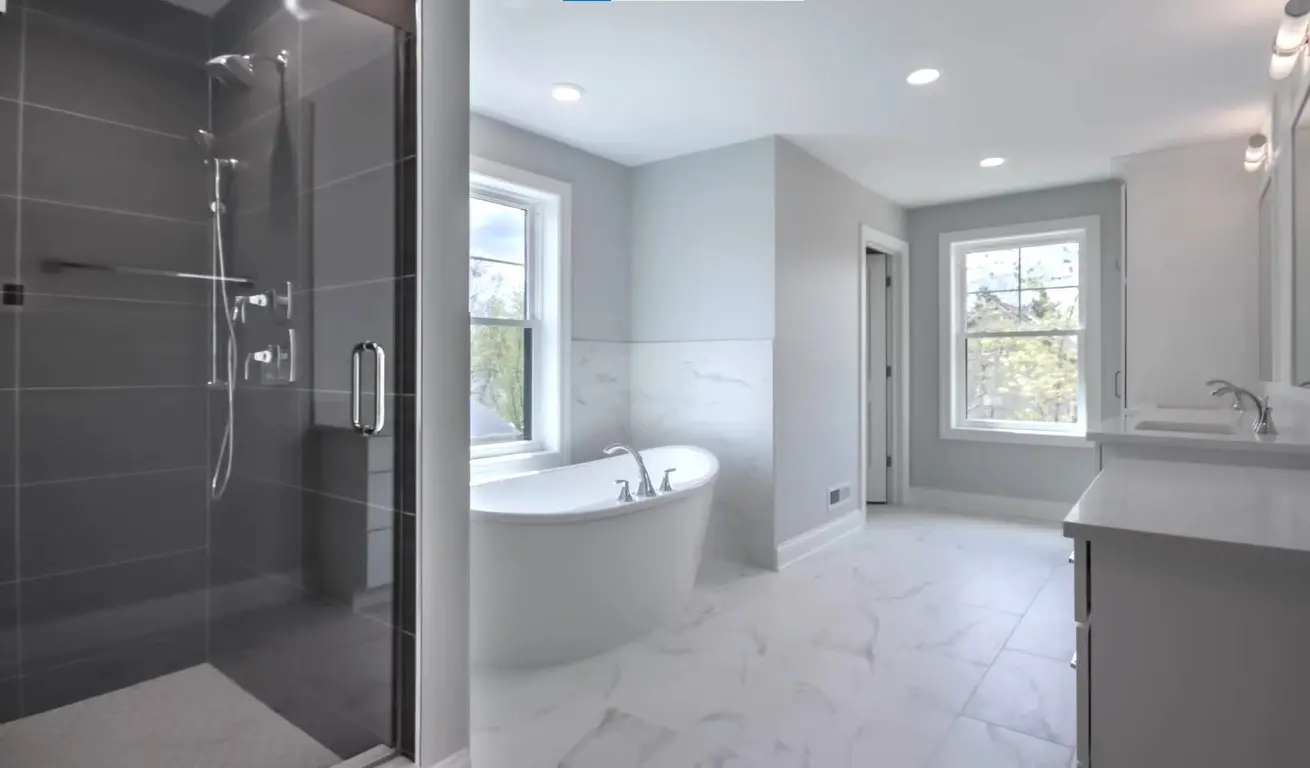
Porcelain is the most moisture-resistant common flooring option for kitchens and baths. It does not swell, rot, or support mold growth in the tile body itself. It handles spills, steam, and wet traffic without structural change.
Modern porcelain comes in wood-look, stone-look, and large-format styles that reduce the number of grout lines. The tile itself is highly durable, but the weak points are the grout and the installation. Cementitious grout is porous and can discolor or harbor mildew in humid conditions if not sealed and maintained, while epoxy or high-performance grouts reduce that risk. A flat, properly prepared substrate is essential, especially with large-format tile.
Porcelain stays cool underfoot, which many people prefer in a warm climate. It is harder than vinyl or wood, so comfort and acoustics differ. For full bathrooms, laundry rooms, and high-spill kitchen zones, it remains one of the most dependable choices.
Rigid-Core Luxury Vinyl (SPC): Waterproof and Practical
SPC (stone plastic composite) luxury vinyl plank is fully waterproof at the plank level. The dense core does not expand or contract with humidity the way wood products do. A quality wear layer resists scratches from sand, pets, and daily traffic.
In kitchens, SPC handles spills and wet mopping well. In bathrooms, it performs better than wood or standard laminate, though prolonged standing water at seams or edges can still reach the subfloor if the installation is not careful. Click-lock systems with tight joints and proper perimeter detailing reduce that risk.
SPC is warmer and quieter underfoot than tile, and installation is generally faster and less demanding of substrate flatness than large-format porcelain. It cannot be refinished like wood, so the wear layer thickness and quality matter for long-term appearance. WPC (wood-plastic composite) cores offer more cushion but can be less rigid, so for moisture-critical rooms, SPC is usually the more stable choice.
Engineered Hardwood: Limited Use in Wet Rooms
Engineered hardwood is more dimensionally stable than solid hardwood because the cross-laminated core resists movement. It can work in kitchens when humidity is well controlled, spills are cleaned promptly, and the product is specifically rated for the conditions.
It is not a strong choice for full bathrooms or areas with frequent standing water. Water that reaches the core or seams can still cause swelling or finish failure. In Charleston homes with high ambient humidity, engineered wood is better reserved for living areas and bedrooms where moisture exposure is lower.
If real wood is important in a kitchen, select a product with a stable core, a durable finish, and a clear maintenance plan. Expect more movement risk than with tile or SPC.
Materials to Approach with Caution
Solid hardwood is highly reactive to humidity and is generally a poor fit for kitchens and baths in coastal climates. Standard laminate with a wood-fiber core can swell at the edges when water penetrates. Even “water-resistant” laminate is not equivalent to waterproof rigid-core vinyl or porcelain in wet rooms.
Carpet is unsuitable for these spaces because padding and fibers trap moisture.
Installation and Substrate Matter as Much as the Product
Even the best flooring fails if the substrate is wet or unstable. Concrete slabs should be tested for moisture before installation. Elevated humidity in crawl spaces or poor drainage can drive moisture upward. In older Charleston homes, existing wood subfloors need evaluation for rot or soft spots before new flooring goes down.
Transitions, expansion gaps (where required), and sealing at wet walls and fixtures protect the installation. In bathrooms, proper slope to drains and waterproofing under tile in wet zones are essential. Whole-house humidity control supports every flooring choice. Keeping indoor relative humidity in a moderate range reduces stress on wood products and limits condensation issues.
Practical Recommendations by Room
Full bathrooms and showers
Porcelain tile remains the most reliable option. Use quality grout and maintain sealing where needed.
Kitchens
SPC luxury vinyl and porcelain both perform well. Choose based on comfort preference, design goals, and how the floor connects to adjacent rooms.
Powder rooms and laundry
Either porcelain or SPC works. SPC often provides a warmer feel and simpler maintenance if grout lines are a concern.
Open plans connecting to living areas
If continuous flooring is desired, SPC can bridge wet and dry zones more easily than tile or wood. Alternatively, use tile in the wet zone and transition carefully to another material.
Making the Choice
Moisture-resistant flooring for kitchens and baths in Charleston prioritizes materials that do not absorb water or move significantly with humidity. Porcelain tile and rigid-core SPC vinyl lead for wet areas. Engineered hardwood can work in kitchens under controlled conditions but carries more risk. Solid wood and standard laminate are better kept out of high-moisture rooms.
Match the product to the room’s exposure, the home’s humidity control, and how the space is used. Proper installation and ongoing moisture management protect the investment. A floor chosen for the climate stays flatter, cleaner, and more reliable year after year.
Selecting Flooring for a Charleston Kitchen or Bath?
The right moisture-resistant materials protect both the look and the structure of these hardworking rooms. If you are planning a renovation, we can help evaluate options that suit your home and the local climate. Contact us to discuss your project.