How to Design a Kitchen That Handles Coastal Moisture
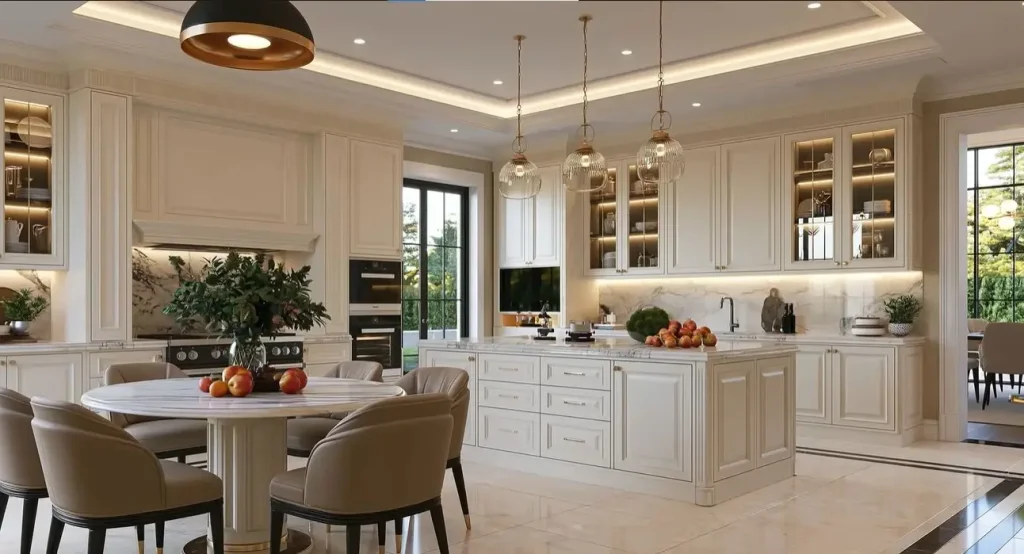
Kitchens in Charleston and the surrounding Lowcountry face constant moisture stress. High ambient humidity, cooking steam, dishwashing, and salt air combine to test every material and assembly. A kitchen designed for a dry inland climate often fails here—cabinet edges swell, doors warp, finishes peel, and hardware corrodes.
Successful coastal kitchen design starts with moisture management rather than style alone. The right materials, ventilation, and construction details keep the space functional and attractive for years.
Why Standard Cabinets Fail in This Climate
Particleboard and low-grade fiberboard absorb moisture readily. In Charleston’s humid air, the compressed fibers swell, edges soften, and doors lose alignment. Once the core expands, the damage is rarely reversible.
Quality plywood performs better. Cross-laminated layers expand and contract more evenly and hold fasteners more securely. Marine-grade or high-quality cabinet plywood with water-resistant adhesives offers still greater resistance in the most demanding locations, such as under sinks or near dishwashers.
Solid wood doors and face frames can work when species and finishes are chosen carefully, but they still move with humidity. Many durable kitchens combine plywood boxes with stable door materials and thorough sealing on all surfaces and edges.
Cabinet Construction That Lasts
Specify full plywood box construction for sides, bottoms, tops, and backs. Confirm the grade and adhesive type with the cabinet maker. Edge banding must be thick and well bonded so moisture cannot reach the core.
Finishes matter as much as the substrate. Multi-step conversion varnishes or catalyzed coatings that seal all six sides of panels and doors provide a more reliable barrier than thin factory finishes. Painted finishes require dense, stable substrates so the paint does not crack as materials shift.
Hardware should resist corrosion. Soft-close hinges and full-extension slides in stainless or other corrosion-resistant finishes hold up longer than standard plated options in salt-influenced air.
Ventilation Removes Moisture at the Source
Cooking generates significant water vapor. A ducted range hood that vents outdoors is the primary defense. Recirculating hoods filter some grease and odors but leave the moisture inside the house. Size the hood for the cooktop and layout.
Capture efficiency and proper mounting height matter as much as raw CFM. Smooth, rigid metal duct with minimal bends and a backdraft damper performs better than flexible duct. In coastal exposures, corrosion-resistant exterior terminations and fasteners reduce long-term maintenance. Makeup air becomes important with higher-capacity hoods so the house is not pulled into negative pressure.
Local codes and good practice guide when this is required. Bathroom and laundry exhaust should also vent outdoors. Never discharge moisture-laden air into attics or wall cavities.
Countertops, Floors, and Surfaces
Choose surfaces that tolerate moisture and cleaning without absorbing water. Quartz, properly sealed natural stone, porcelain, and solid-surface materials generally perform well. Wood counters require diligent sealing and maintenance in this climate.
Flooring continuity with adjacent rooms is common in historic and newer Charleston homes. Engineered hardwood with a stable core, porcelain tile, or quality luxury vinyl can handle kitchen conditions better than solid hardwood in high-humidity settings. Transitions and underlayment details should prevent moisture migration from below or from spills.
Backsplashes and wall finishes near the sink and range benefit from non-porous or well-sealed materials. Grout should be sealed and maintained.
Humidity Control Beyond the Kitchen
Even a well-designed kitchen cannot overcome whole-house humidity problems. Target indoor relative humidity in a range that supports comfort and material stability—commonly cited guidance falls around 40–50 percent, and consistently above 60 percent raises mold and material risks.
Whole-house dehumidification integrated with the HVAC system, or dedicated equipment, helps maintain that range when outdoor conditions are persistently humid. Properly sized air conditioning that runs long enough to remove moisture is also essential; oversized systems that short-cycle leave humidity high.
Crawl-space and attic conditions affect the entire house. Addressing drainage, vapor barriers where appropriate, and ventilation in these areas protects kitchen materials from below and above.
Layout and Daily Use Considerations
Design storage and work zones so water is contained. Under-sink cabinets benefit from waterproof liners or trays. Dishwasher and refrigerator locations should allow for spill control and easy access for maintenance.
Soft-close hardware and full-extension drawers improve function and reduce wear. Finishes that clean easily without harsh chemicals help preserve protective coatings.
In historic houses, new kitchen work usually falls outside Board of Architectural Review jurisdiction as long as exterior appearance is unchanged. This allows freer material and layout choices while the rest of the house retains its character.
Common Mistakes to Avoid
Choosing cabinets based only on appearance or price often leads to early swelling and misalignment. Skipping a properly ducted range hood leaves cooking moisture to circulate. Neglecting edge sealing and finish quality undermines even good substrates. Ignoring whole-house humidity control puts constant stress on every kitchen surface.
Underestimating the cost of durable construction is another frequent issue. Plywood boxes, quality finishes, and corrosion-resistant hardware cost more upfront but avoid the expense and disruption of early replacement.
Building a Kitchen That Endures
A moisture-resistant coastal kitchen combines stable cabinet construction, thorough sealing, effective source ventilation, durable surfaces, and whole-house humidity management. Style remains important, but performance in Charleston’s climate determines how long the kitchen looks and functions as intended.
When materials and systems are chosen for the environment rather than against it, the kitchen becomes one of the most reliable and enjoyable spaces in the house.
Planning a Kitchen Built for Charleston’s Climate?
Durable materials and proper ventilation make the difference between a kitchen that lasts and one that struggles with humidity. If you are designing or updating a kitchen, we can help select construction methods and finishes suited to coastal conditions. Contact us to discuss your project.